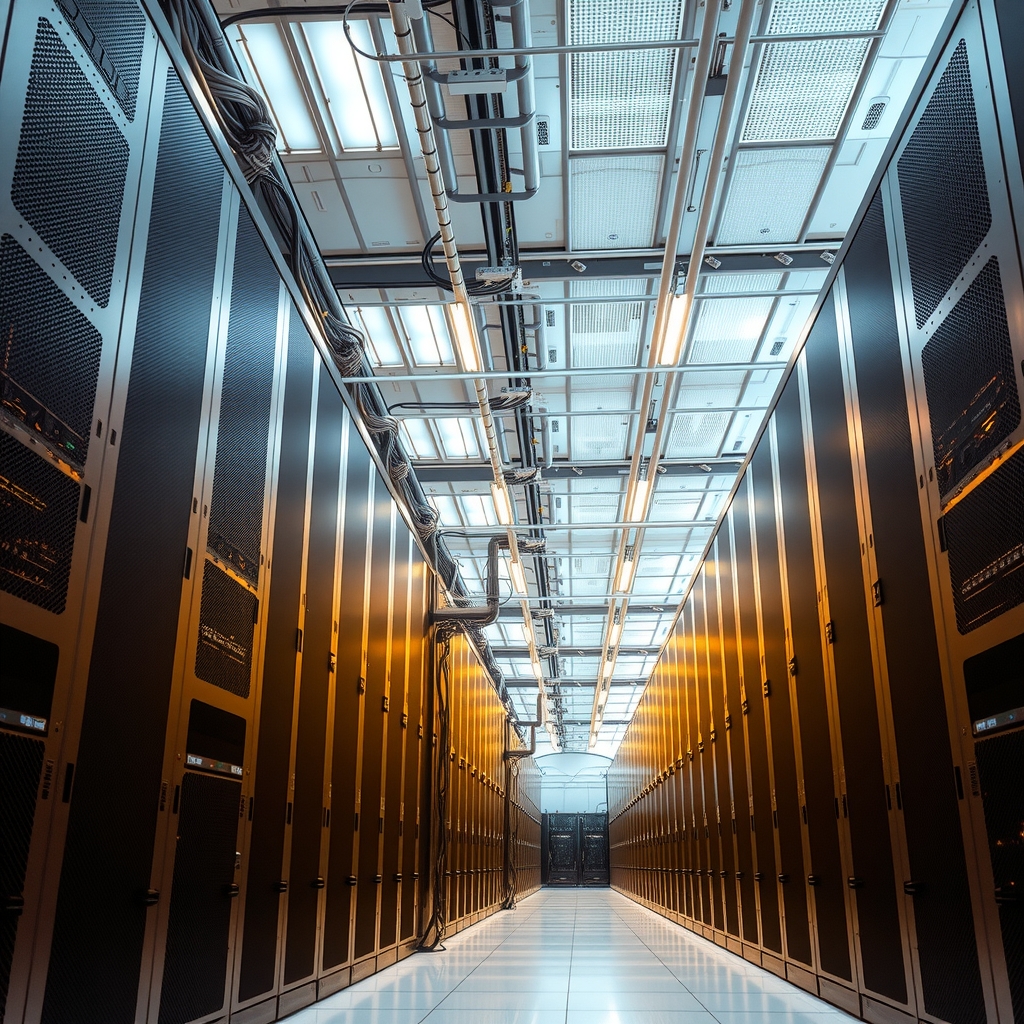
KIOXIA America and Dell Technologies have assembled a 42U rack containing 157 petabytes of raw flash capacity, combining 640 KIOXIA LC9 Series 245.76TB solid-state drives with 16 Dell PowerEdge R7725xd servers running Dell ObjectScale. The companies describe it as an object storage configuration designed to place unusually high capacity in a standard rack footprint.
The configuration builds on a 40-drive ObjectScale node that Dell qualified earlier in 2026. Each 2U PowerEdge R7725xd server holds 40 of the high-capacity drives, amounting to about 9.83PB of raw capacity. Sixteen such servers provide a calculated total of 157.29PB and occupy 32U, leaving 10U unfilled in the rack.
KIOXIA calls the setup the first 157PB object storage configuration in an industry-standard rack, a distinction it says is based on its market survey. The companies have not announced when the rack configuration will be available. They also have not disclosed its usable capacity, data protection scheme or performance results. The 157PB figure is raw capacity, not a measure of space available to applications after protection and system overhead.
High-capacity SSDs underpin the design
The rack’s capacity depends on the LC9 Series’ largest drive option: a 245.76TB model in the E3.L form factor. KIOXIA also offers LC9 drives with capacities up to 122.88TB in 2.5-inch and E3.S formats. The company says the series uses BiCS FLASH generation 8 3D QLC NAND arranged in a 32-die stack.
The drives support PCIe 5.0, NVMe 2.0 and NVMe-MI 1.2c. KIOXIA lists compatibility with the Open Compute Project Datacenter NVMe SSD specification v2.5, while noting that some requirements are unmet. The series also includes Flexible Data Placement, a feature intended to reduce write amplification and extend drive life.
KIOXIA rates the LC9 Series at a mean time to failure of 2.5 million hours, while emphasizing that this statistical measure is not a guarantee or estimate of an individual product’s lifespan. The drives include flash die failure protection, which KIOXIA says can allow an SSD to continue operating with full reliability if a NAND die fails.
Efficiency claims remain unquantified
KIOXIA presents consolidation as a potential benefit of using very high-capacity flash: fewer drives and systems could hold a given amount of data, reducing storage footprint and, according to the company, improving terabytes per watt and lowering cooling needs compared with hard drives or lower-capacity SSDs. Dell also points to less cabling when data is concentrated in fewer systems and racks.
Those efficiency benefits have not been accompanied by power or cooling measurements for the 157PB configuration. Without published figures for the rack’s operating characteristics or a defined comparison system, buyers cannot assess the claimed savings against another object storage design at equivalent capacity.
George Papadopoulos, Dell Technologies’ senior vice president of product and engineering, said AI is driving growth in unstructured data and that customers need to scale capacity without expanding data center footprint and power consumption. He said ObjectScale combined with KIOXIA’s 245.76TB drives can consolidate data into fewer systems and racks while reducing cabling, power and cooling requirements.
ObjectScale and drive security options
Dell positions ObjectScale as an object storage platform for unstructured data, including AI training, big data analytics and cloud-native applications. For non-production evaluation, Dell offers a free ObjectScale edition as a virtual appliance with no time limit. The supplied version is 4.4; Dell recommends eight CPU cores, 64GB of RAM and 1TB of additional block storage.
LC9 security options include SIE, SED and FIPS SED models, and KIOXIA says CNSA 2.0 firmware-signing support applies across the series. SED models support TCG Opal and Ruby. FIPS models use a security module designed to comply with FIPS 140-3, with current validation status available from KIOXIA on request. The company notes that some security models are unavailable in certain countries because of export and local regulations.