
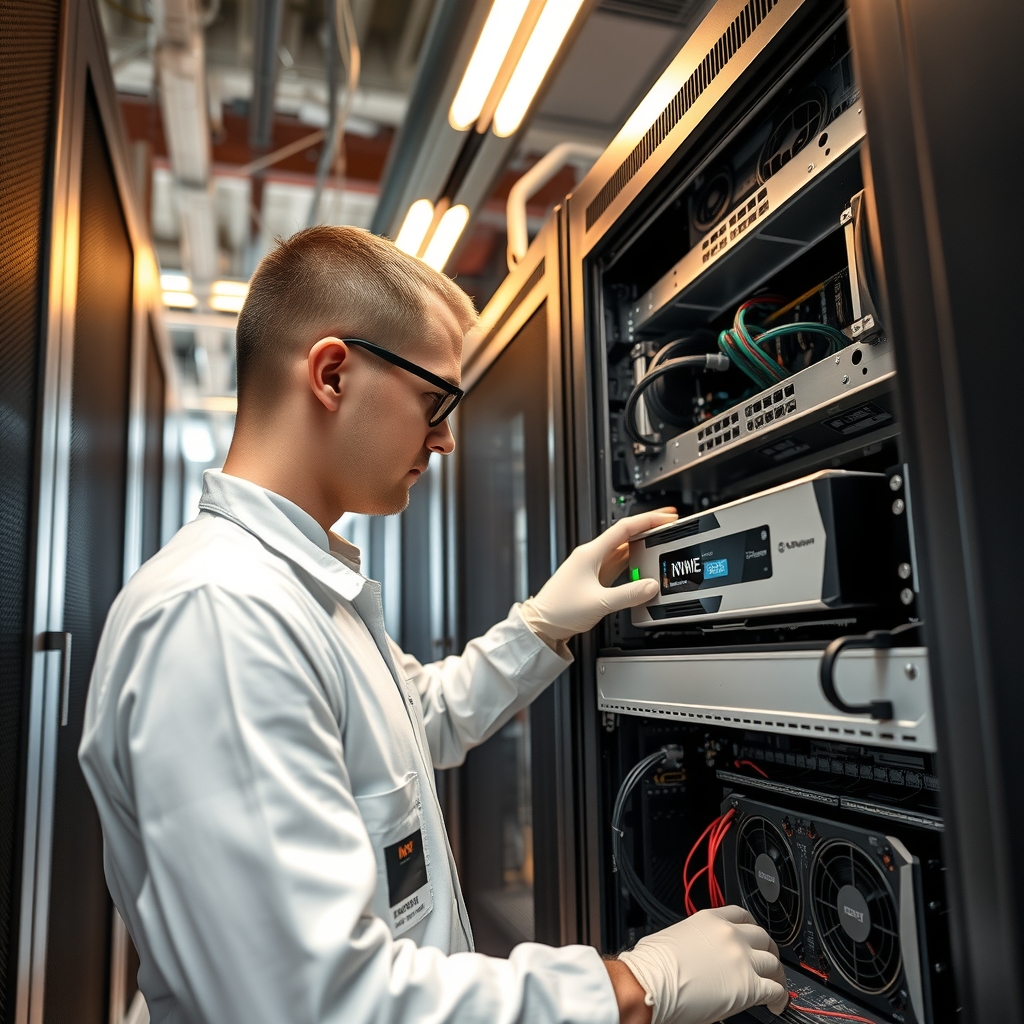
Kioxia is significantly upgrading its storage portfolio to meet the extreme demands of modern AI-driven infrastructure. At the 2026 OCP Global Summit, the company unveiled a series of performance-oriented hardware updates, headlined by the third generation of its XL-FLASH technology, which effectively doubles the input/output operations per second (IOPS) compared to its predecessor.
Accelerating Throughput for AI Workloads
The new iteration of the GP Series SSDs, powered by Gen 3 XL-FLASH, is engineered to handle the massive data ingestion requirements of AI training and inference. By utilizing an advanced architecture that incorporates shorter word lines and bit lines, Kioxia has reduced RC delay, allowing the drive to achieve over 20 million IOPS for 512-byte random reads. This represents a substantial leap from the 10 million IOPS provided by the previous GP1 model introduced earlier in August 2026.
Beyond raw speed, the Gen 3 XL-FLASH architecture improves energy efficiency by approximately 40 percent for read operations and 80 percent for write operations. These performance gains are facilitated by a refined 16-plane architecture and enhanced flash cell management, ensuring that data centers can scale their storage throughput without proportionally increasing their power footprint.
Expanding High-Capacity Storage Options
In addition to its high-performance flash offerings, Kioxia introduced the LD4 series, a high-capacity QLC (quad-level cell) drive designed for hyperscale data centers. Built using the company’s 218-layer BiCS 8 technology, the LD4 utilizes a PCIe 5 x 4 interconnect to provide the bandwidth necessary for large-scale public cloud and enterprise storage deployments. While current offerings are available at 15.36 TB and 30.72 TB, the architecture is designed to support capacities up to 122.88 TB, positioning the drive as a versatile candidate for massive data lakes.
The LD4 adopts the E1.L form factor and adheres to the OCP Datacenter NVMe SSD Specification 2.6, ensuring broad compatibility with existing server infrastructure. By moving from the PCIe 3 interface found in previous iterations to a modern PCIe 5 bus, Kioxia is addressing the bottleneck often encountered when moving large datasets between storage arrays and compute clusters.
Innovations in Thermal Management
As storage density increases, thermal regulation has become a critical challenge for data center operators. To address this, Kioxia is also demonstrating its liquid-cooled NX1 Series E1.S NVMe SSDs. By integrating liquid cooling directly into the storage module, Kioxia aims to maintain peak performance levels under sustained high-load conditions, preventing the thermal throttling that often limits the longevity and reliability of dense storage configurations. These developments underscore a broader industry shift toward specialized hardware designed to serve as the foundational bedrock for AI-heavy enterprise environments.