
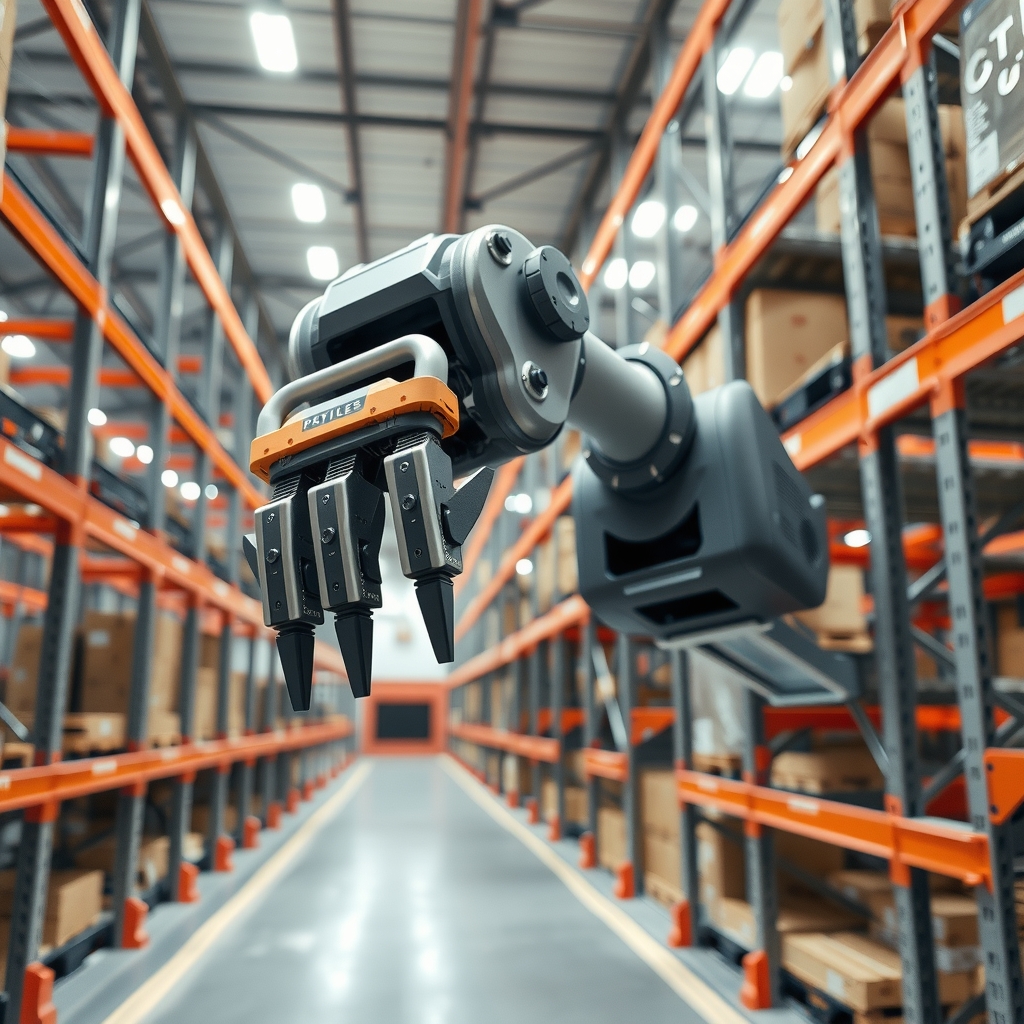
Ultra Robotics Corp. has successfully closed a $62 million funding round, signaling a significant push into the automation of warehouse logistics. The capital infusion, which includes a $50 million Series A round led by Framework Ventures, follows a seed round supported by Y Combinator and NextView Ventures. The company plans to utilize these funds to accelerate engineering efforts and broaden the commercial deployment of its flagship automation system, the OP1 Operator.
Advancing Warehouse Automation Through Specialized Robotics
The OP1 Operator is designed to address the complex, labor-intensive tasks inherent in modern fulfillment centers. Functioning as a humanoid-style robotic system integrated with a specialized robotic arm, the unit features unique forklift-prong grippers capable of navigating warehouse shelves up to 10 feet high. Beyond simple retrieval, the system is engineered to handle the nuances of inventory management, including the separation of mixed-item shipments into individual component bins and the execution of kitting operations, where diverse items are consolidated into single parcels for customer orders.
A notable aspect of the OP1 Operator’s design is its focus on operational simplicity. The robot is mounted on a mobile, wheeled base and relies on a direct power connection via a standard wall outlet, eliminating the complexities associated with battery management and charging infrastructure. This design choice, combined with a manual mobility model, allows warehouse staff to reposition units between different operational sections as needed, with mechanical locks ensuring stability during active tasks.
Data-Driven Efficiency and Cloud Integration
At the core of the OP1 Operator’s functionality is a sophisticated sensor array that feeds data back into a centralized intelligence framework. By establishing a persistent connection to the local network, each robot shares operational telemetry that informs the company’s artificial intelligence models. This feedback loop is designed to minimize the configuration burden for end users, enabling rapid deployment cycles that Ultra Robotics claims can have a unit operational within a few hours.
The integration of these robots into a warehouse environment extends to the final stages of the supply chain, including packaging, sealing, and the application of shipping labels. With a throughput capacity of up to 1,000 items per day per unit, the system represents a significant step toward addressing the throughput bottlenecks often found in high-volume, diverse-inventory fulfillment environments. As the company scales, the focus remains on refining these AI models to further automate the intricate workflows that define modern logistics, moving from prototype to widespread industrial application.