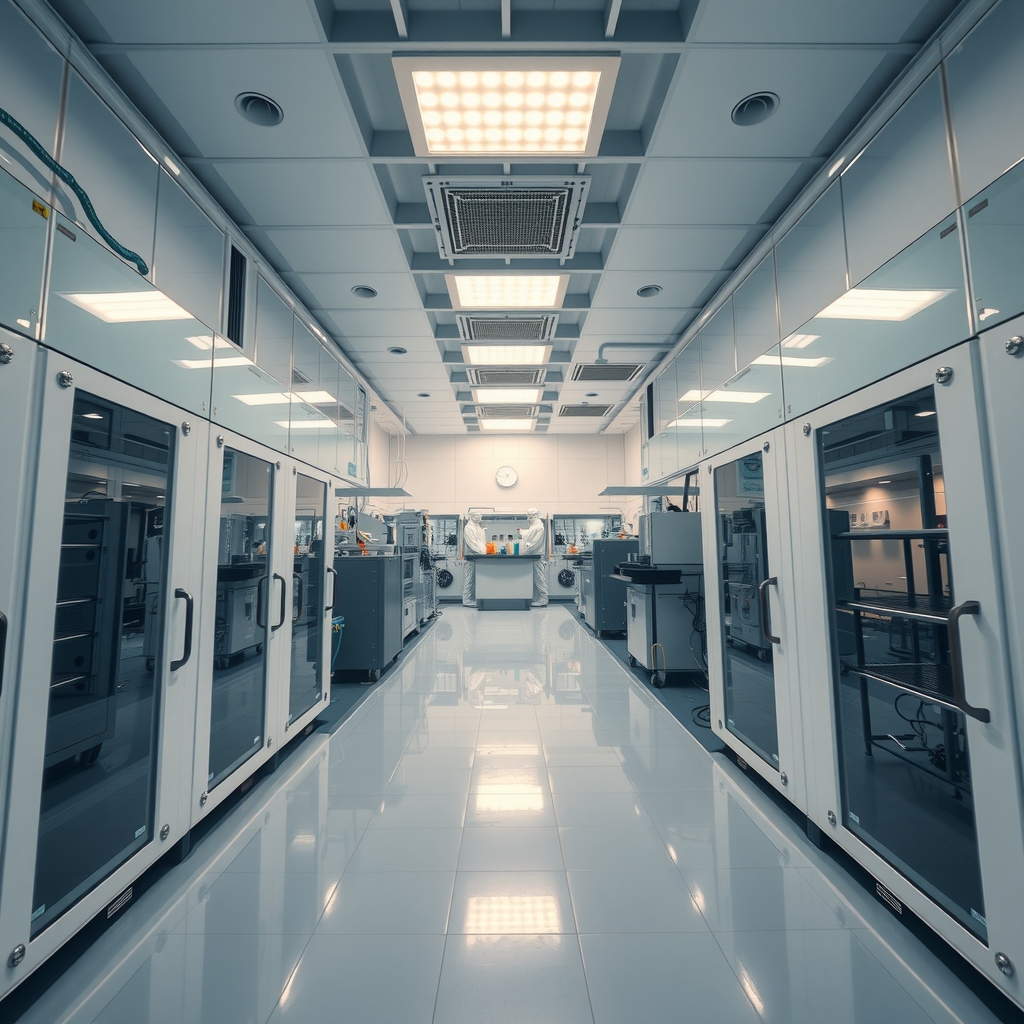

Microsoft has detailed a comprehensive strategy to evolve its cloud infrastructure, aiming to support the next era of super-intelligence through a combination of proprietary silicon and open industry standards. As artificial intelligence workloads shift toward agentic tasks and long-context reasoning, the company is re-engineering its hardware stack—from power delivery and cooling to custom-designed processors—to meet the demands of large-scale inference.
Custom Silicon and System Co-Design
At the heart of this initiative are the Maia and Cobalt processor families. The Azure Maia 300, the company’s latest AI accelerator, is optimized for latency-sensitive conversational experiences and multi-step agentic workflows. According to internal performance metrics, the Maia 300 is projected to deliver 40% more tokens per watt than existing GPU-based systems. Complementing this is the Cobalt 200, an agent-native CPU designed to handle the orchestration, data retrieval, and memory management tasks inherent in modern AI agents, reportedly yielding a 33% reduction in agent call latency compared to its predecessor.
Microsoft is employing a “system co-design” philosophy, where hardware and software are optimized in tandem. This approach extends to security and data processing, with the Azure Boost Data Processing Unit offloading networking and security functions from the primary CPU to dedicated silicon. Furthermore, the company is introducing the Tessera Integrated HSM, an open-source hardware security module initiative developed in collaboration with Marvell and Oracle, designed to keep cryptographic keys protected within a hardware boundary.
Redefining Data Center Fabric and Power
Beyond individual chips, Microsoft is addressing the systemic bottlenecks of hyperscale AI. The company is promoting new networking specifications, such as Multipath Reliable Connection (MRC), to optimize Ethernet for AI-scale training, enabling clusters that scale beyond 100,000 GPUs. These efforts are mirrored in the Optical Compute Interconnect Multi-Source Agreement (OCI MSA), which provides a foundation for high-bandwidth, multi-vendor infrastructure.
The physical footprint of the data center is also undergoing a radical transformation. Through the Open Compute Project (OCP), Microsoft is advancing 800VDC power delivery architectures, exemplified by its “Mt. Diablo” disaggregated power design. This architecture separates power conversion from compute racks, allowing for modular scaling of power delivery. Simultaneously, the company is implementing zonal cooling strategies—utilizing the “Mt. Atlas” heat exchanger unit—to manage the diverse thermal profiles of liquid-cooled accelerators and air-cooled servers.
Prioritizing Open Standards and Sustainability
Microsoft’s strategy emphasizes that the transition to “frontier infrastructure” cannot be achieved in isolation. By contributing specifications for hardware fault management, telemetry, and security frameworks to the OCP, the company aims to reduce industry-wide redundancy. Sustainability remains a central pillar of this roadmap, with efforts focused on low-embodied-carbon building materials, circular server recycling, and advanced heat-reuse technologies. As these innovations roll out, Microsoft intends to utilize AI-driven diagnostics to enhance fleet resiliency, ensuring that the infrastructure supporting the next generation of intelligent applications remains both reliable and scalable.