As the enterprise push for artificial intelligence continues to intensify, the industry has hit a thermal and electrical ceiling. Traditional CPU and GPU architectures, while formidable in throughput, are increasingly viewed as a “devil’s bargain”—offering raw processing power at the cost of massive energy consumption and architectural overhead. Seeking to disrupt this paradigm, Efficient Computer Co. announced on September 29, 2026, that it has closed a $97 million funding round, bringing its total capital raised to $650 million.
The investment, led by TQ Ventures with participation from a diverse syndicate including Eclipse, Union Square Ventures, and Toyota Ventures, underscores a growing market appetite for silicon that moves beyond the limitations of x86 and standard GPU designs. Efficient Computer, which previously secured $60 million in February, is carving out a niche with a unique data flow architecture designed to prioritize energy efficiency without sacrificing the programmability required for enterprise AI workloads.
### The Data Flow Advantage
For decades, data flow architecture remained largely confined to academic research, largely due to the immense challenge of creating software tooling that could manage the complexity of general-purpose tasks as efficiently as the established architectures from Intel, AMD, and Nvidia. Efficient Computer aims to change that narrative. According to CEO Brandon Lucia, the company has successfully integrated both the hardware design and the necessary software stack to make these chips both highly adaptable and energy-efficient.
Modern processors are often constrained by the necessity of maintaining a precise execution state, high-speed data movement, and complex control logic. Efficient’s approach streamlines this by aligning instruction execution directly with the application’s data flow. By eliminating the unnecessary movement of data that plagues current general-purpose chips, the startup claims its architecture can achieve performance-per-watt gains of up to 100 times compared to traditional x86 designs.
### Moving from Edge to Enterprise
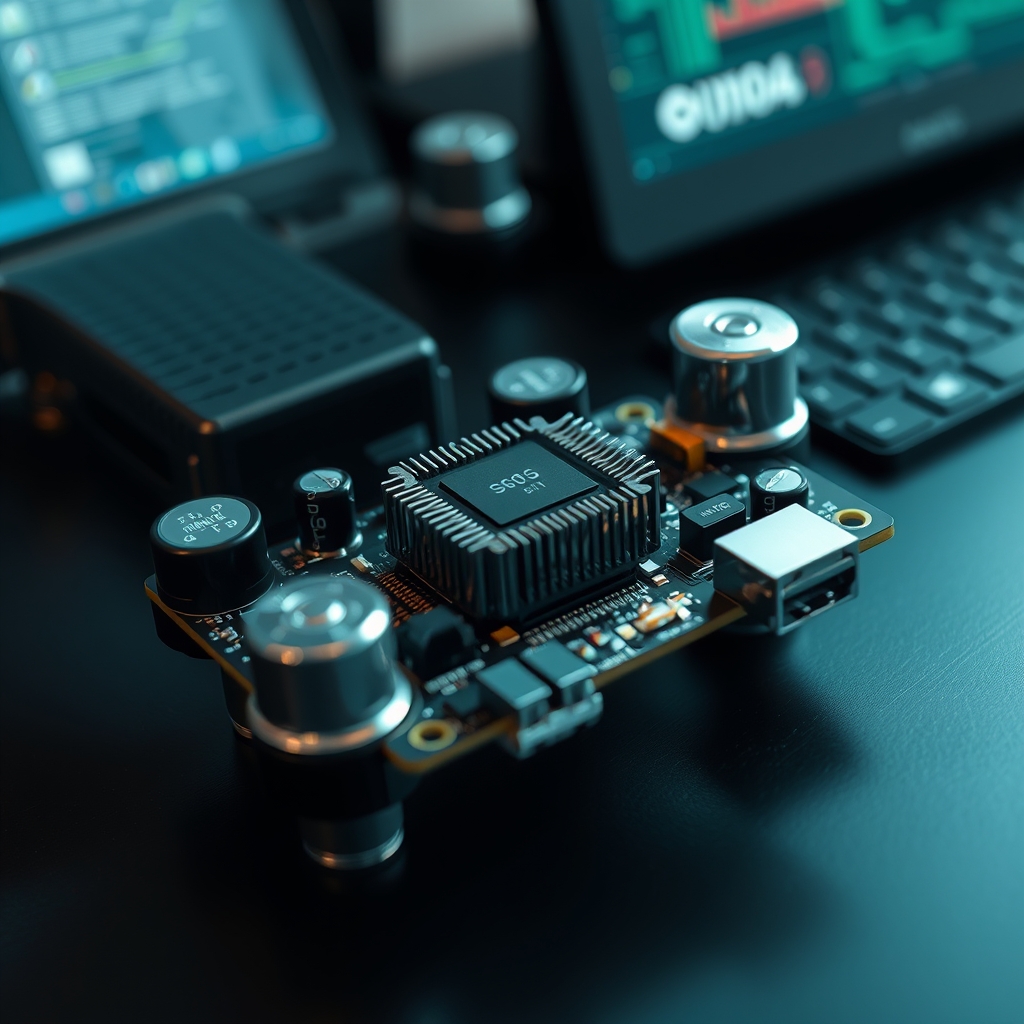
While the ultimate trajectory for the startup involves scaling its technology for the demanding requirements of data center servers, Efficient is taking a strategic, tiered approach. Its inaugural product, the Electron E1 chip, is specifically engineered for autonomous systems—drones and small-scale robots—where battery longevity and power constraints are critical.
Industry analysts have noted that the ability to bridge the gap between academic theory and commercial volume is a significant barrier to entry for new chip designers. TQ Ventures partner Andrew Marks noted that his firm’s decision to invest was driven by tangible progress; Efficient has already successfully taped out its silicon four times and has moved to shipping volume units to customers. This early market validation is a critical milestone for a startup operating in an industry often characterized by long development cycles and high capital requirements.
### Scaling the AI Infrastructure
As AI agents and edge-computing workloads proliferate, the limitations of current hardware are becoming more apparent. Current specialized accelerators, while effective for AI inference, are often too rigid for the dynamic needs of complex enterprise environments. Efficient’s proposition is to provide a platform that is “easy to program, fast, and efficient,” allowing developers to run more than just basic nano-optimized algorithms at the edge.
With this latest infusion of $97 million, Efficient Computer is positioned to scale production volumes to meet what the leadership team describes as “overwhelming demand.” While the company has kept its specific customer list confidential, the size of the investment and the rapid pace of their hardware iterations suggest that they are quickly becoming a company to watch in the evolving semiconductor landscape. For cloud architects and infrastructure planners, Efficient represents a potential shift in how future AI systems will be balanced between the data center and the power-sensitive edge.
Source: CIO.com