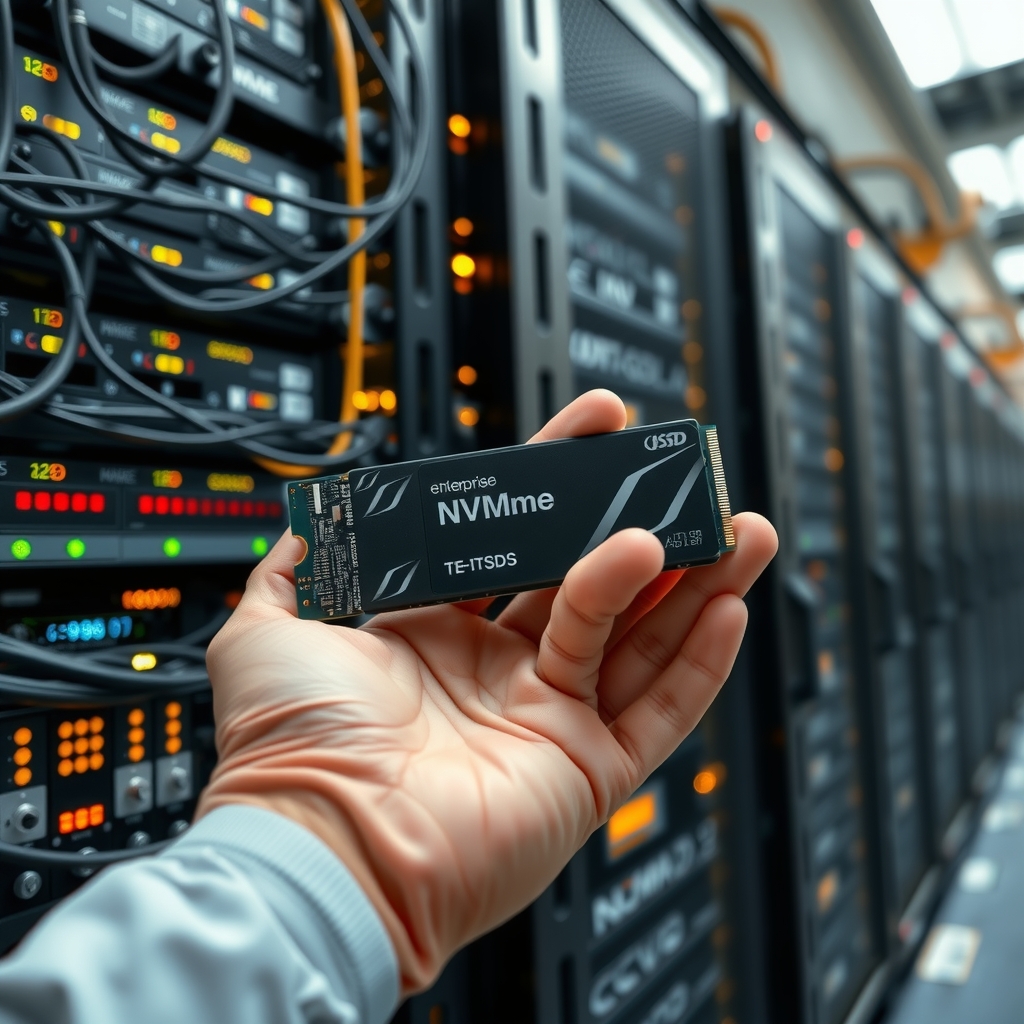

DDN plans to offer its EXAScaler parallel file system as software that customers can install on qualified servers, expanding beyond the company’s purpose-built appliances and cloud-partner deployments. The option is scheduled to arrive with EXAScaler 7, beginning on DDN’s AI2200 server. A limited beta is targeted for early 2027.
The change gives customers a choice between DDN-integrated systems and a software deployment on verified hardware. DDN says qualified third-party appliances are expected to follow, but it has not named vendors or published the minimum hardware requirements. Licensing details and a general availability date for the software-defined offering have also not been announced.
Expanding EXAScaler deployment options
EXAScaler is based on Lustre, a parallel file system used to serve data across multiple storage servers. That architecture is designed for workloads that need concurrent access to large data sets, including high-performance computing and artificial intelligence. DDN describes its implementation as open Lustre with AI I/O optimization, automated deployment and enterprise support.
Until now, customers have obtained EXAScaler through DDN appliances or cloud partners. The new software option starts with the AI2200, while DDN says its purpose-built systems will remain available for customers seeking a complete, integrated solution. The company is positioning software deployment for organizations such as hyperscalers, cloud providers and AI platform teams that already operate storage infrastructure or want to select hardware for their requirements.
EXAScaler also remains available through cloud partners, including Google Cloud Managed Lustre. DDN’s other data platform, Infinia, is already offered in a software-defined format. The company said Infinia version 2.4 added multi-tenancy and POSIX support; EXAScaler 7 will bring additional capabilities to its own Lustre-based platform.
Multi-tenancy, restore and I/O features
For the first half of 2027, DDN is targeting several EXAScaler 7 updates. Multi-tenancy REST APIs are intended to apply quality-of-service limits and fair sharing on a per-tenant basis, allowing multiple teams to use one system while reducing interference between their jobs. The release is also slated to include File Restore for recovering accidentally deleted files and an audit log to support investigations.
DDN lists intelligent hybrid I/O as a further performance feature, intended to increase throughput and IOPS. The company has not published performance figures for these additions and says validated data will follow. The planned dates are targets and may change, according to DDN.
One use case DDN describes is running high-performance computing simulations and AI training against shared data, avoiding the need to copy it between environments. The company points to life sciences, where researchers may train AI surrogate models using molecular dynamics simulation outputs to predict protein behavior. The example illustrates the kind of shared-data workflow DDN is targeting; the company has not provided measured results for this EXAScaler scenario.
Hardware and timing details remain open
The early 2027 beta is the clearest timing disclosed for EXAScaler’s software-defined deployment. DDN has not specified when the option will become generally available, which third-party systems will qualify, or the technical requirements customers will need to meet. Those details will matter to organizations evaluating whether existing servers can run the software or whether new hardware will be necessary.
DDN’s announcement also described an AMPHIX internal test of a separate Enterprise AI HyperPOD system. That deployment used DDN Infinia—not EXAScaler—as storage, so its results do not demonstrate EXAScaler 7 performance. DDN reported 98.8 percent GPU utilization during a 24-hour training run using eight NVIDIA RTX PRO 6000 GPUs and 500TB of Infinia on Supermicro hardware. The test is distinct from the software-defined EXAScaler plans and should not be treated as a benchmark for them.
For storage teams, EXAScaler 7’s central change is therefore its planned move from appliance- and partner-based delivery to customer-installed software on qualified hardware. The beta and forthcoming hardware criteria will determine how broadly that flexibility can be used.