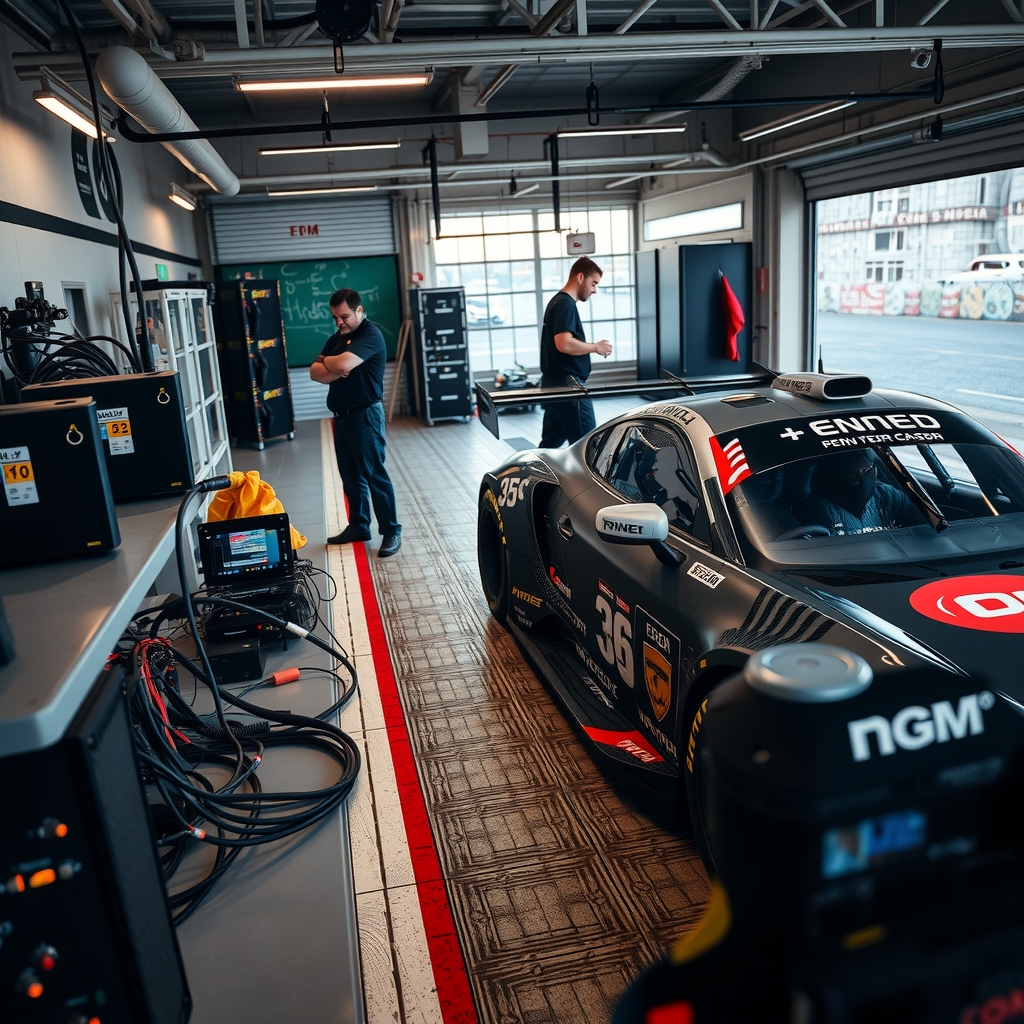
Verizon Business and Bosch Motorsport are expanding a connected-vehicle deployment intended to carry race telemetry across international motorsport events. The arrangement combines remotely provisioned eSIM connectivity with centralized device management, allowing Bosch to use a consistent setup as its RaceConnect sensor systems move between venues and mobile networks.
The deployment has already been used at the Detroit Grand Prix and Motul Petit Le Mans. Bosch Motorsport is extending it to additional domestic and international races, including events in the IMSA WeatherTech SportsCar Championship. Planned events named for future use include the Rolex 24 At Daytona and Mobil 1 Twelve Hours of Sebring.
One connectivity setup across multiple countries
The system brings together Verizon Global IoT Orchestration and its ThingSpace connectivity management platform. A unified Access Point Name, or APN, gives compatible devices a consistent network configuration as they connect to supported mobile networks in different countries. Verizon says its platform supports connectivity in more than 140 countries, using remotely provisioned eSIM profiles to connect devices to local networks.
For Bosch, the arrangement is designed to reduce the need to set up network access separately for each country or event. ThingSpace APIs provide centralized management of connected devices, including activation and suspension, and visibility across the sensor fleet. The eSIM profiles and management tools address provisioning and lifecycle administration; they do not, by themselves, guarantee local network capacity or uninterrupted service.
That distinction matters in motorsport, where equipment is transported, installed and brought online repeatedly in different telecommunications environments. A standardized configuration can simplify deployment processes, while each venue still presents its own requirements for coverage and capacity. Race operations also take place amid high concentrations of spectators, who place demands on local mobile networks.
Telemetry for compliance, performance and safety
Bosch RaceConnect gathers operational and condition data from sensors installed in racing vehicles and sends it to the Bosch RaceConnect private cloud. The information supports technical compliance checks, performance monitoring and race-safety procedures. These uses contribute to digital race marshalling, in which connected sensors and near-real-time data processing supplement manual observations and trackside inspections.
Race vehicles can exceed 320 kilometers per hour, according to the deployment description, making access to telemetry important for officials and engineering teams during an event. Officials can use the data for rules enforcement, while engineers can draw on it when making mechanical adjustments. The deployment is therefore more than a conventional fleet-tracking setup: it combines mobile vehicle telemetry with international connectivity management and event-specific network arrangements.
Local network resources at the Detroit Grand Prix
For the Detroit Grand Prix, Verizon deployed additional mobile infrastructure to support Bosch Motorsport’s telemetry needs. The resources included Cells on Wheels (COWs), Cells on Light Trucks (COLTs), Distributed Antenna Systems (DAS) and a Mobile Private Network. Verizon said the setup was intended to separate critical telemetry traffic from spectator connectivity and reduce its exposure to congestion during the event.
The Detroit deployment illustrates how centralized connectivity orchestration and local network engineering serve different purposes. Global management can help keep device provisioning consistent as equipment travels, but event operators may also need dedicated or supplemental infrastructure to address conditions at a particular site. The source material describes the infrastructure used at Detroit; it does not establish that the same configuration will be deployed at every race.
The model may be relevant to other industrial IoT deployments involving mobile equipment, temporary installations or operations that cross national borders. Its practical value in this case lies in combining eSIM-based connectivity, centralized device lifecycle management and on-site network resources for a demanding, changing environment.
No quantitative telemetry performance results, network availability measurements or comparative cost figures were provided. The expansion is evidence of the operating approach and its use at named race events, but the available information does not quantify improvements in reliability, latency or cost.