SoftBank Corp. and U.S.-based aerospace company Sceye have signed a five-year Master Services Agreement covering the manufacture, launch and operation of stratospheric aircraft equipped with telecommunications systems. The companies aim to use the fleet to provide nationwide mobile broadband coverage across Japan, connecting directly with standard mobile devices.
The agreement moves the collaboration from flight demonstrations toward preparations for commercial deployment. The companies have not disclosed the planned fleet size, deployment milestones or contract value, and nationwide service remains an objective rather than an operating capability.
Adding an aerial layer to mobile networks
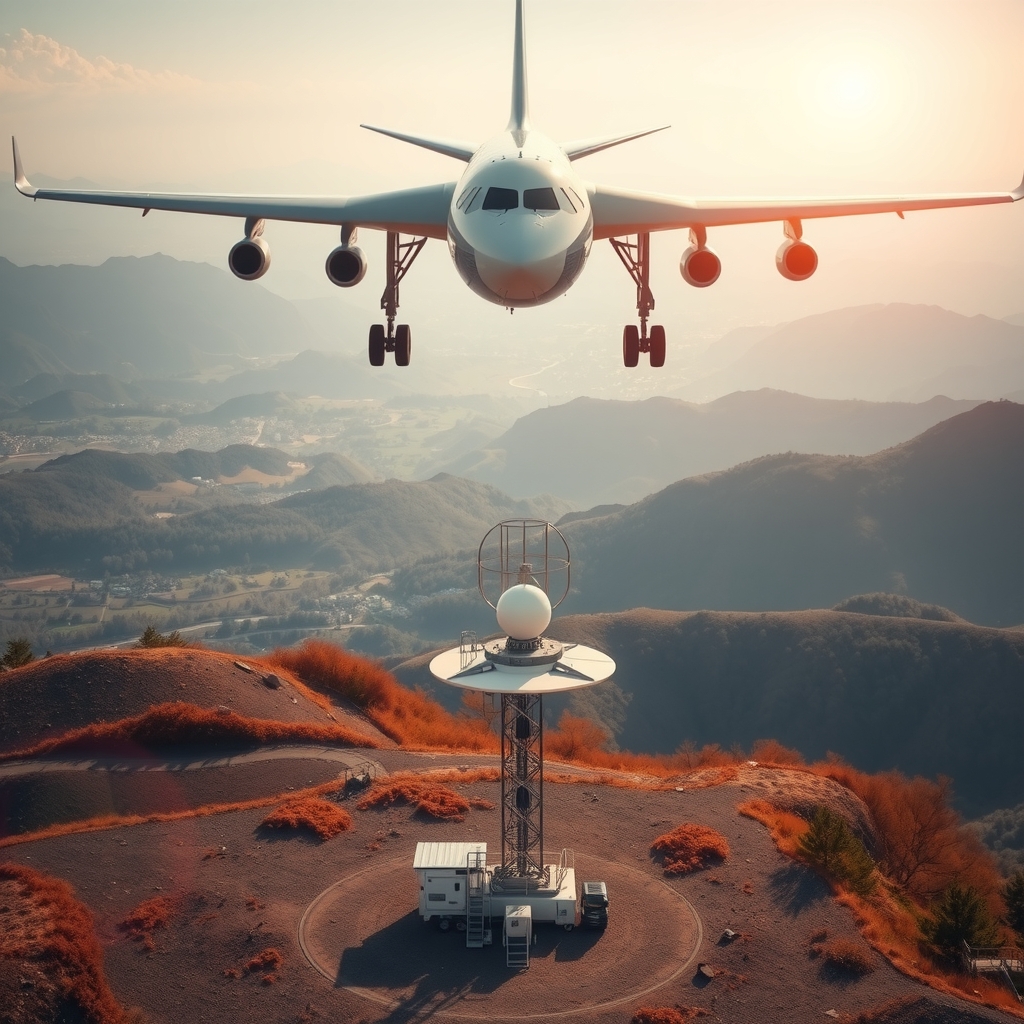
High Altitude Platform Systems, or HAPS, operate in the stratosphere and can provide coverage across broad areas from an aerial position. The approach offers another way to extend wireless reach beyond terrestrial networks, alongside options such as adding ground infrastructure or using satellites. The platforms are intended to complement existing networks, not replace them.
Most of Sceye’s initial fleet under the agreement is planned for mobile broadband service across Japan. A smaller number of platforms will support a Free Space Optical (FSO) network, which uses optical communications to establish links within the stratosphere. The plan therefore includes both aerial wireless access and work on communications links between platforms.
The initiative is part of SoftBank’s Ubiquitous Network strategy, which seeks to integrate terrestrial infrastructure, aerial platforms and satellites in a three-dimensional communications architecture. The agreement follows SoftBank’s investment in Sceye in 2025 and connectivity demonstrations conducted earlier in 2026.
Tests with standard mobile devices
The companies’ recent work included Sceye’s Service Test 1 mission, launched from New Mexico on August 9, 2026. During the 30-day mission, the platform traveled to Japan and returned to the United States, spending about one week operating over Japan.
It carried SceyeCell, a stratospheric telecommunications system designed to deliver mobile broadband to standard devices without specialized satellite terminals. Working with SoftBank, Sceye demonstrated text messaging, voice calls, internet access and video streaming. The tests also covered indoor communications, emergency connectivity, remote drone control and edge computing aboard the platform.
Connecting with conventional mobile devices is a notable element of the tests because it addresses integration with existing mobile network infrastructure, rather than requiring users to rely solely on proprietary communications equipment. The demonstrations establish tested functions, but do not by themselves specify the terms or technical characteristics of a future commercial service.
The mission also included laser-ranging tests, in which the platform was tracked from the ground. The work supports development of optical communications links involving terrestrial, aerial and space-based infrastructure; it does not establish that a commercial FSO network is already operating.
Potential relevance to IoT connectivity
For IoT deployments, stratospheric coverage could eventually offer another connectivity option in rural and mountainous areas, or places where building terrestrial infrastructure is difficult. Potential uses could include remote infrastructure monitoring, environmental sensing, industrial asset tracking and maintaining communications during natural disasters. These are possible applications, not specific services announced under the agreement.
The companies have not established device compatibility for IoT, supported low-power cellular technologies, power-consumption requirements, pricing or integration with connectivity management systems. Those details will matter to device makers and IoT operators assessing whether HAPS can meet their operational needs.
Onboard edge computing demonstrated during the Japan tests also points to the possibility of processing selected data on the platform instead of sending every task to distant cloud infrastructure. The practical role of that capability will depend on which applications are supported and how the eventual network is designed.
Commercial deployment remains the test
Moving from individual flights to sustained coverage will require more than successful demonstrations. The planned service will depend on coordinated fleet operations, integration with mobile networks and continuity of service across platforms. The announcement does not provide a schedule for reaching nationwide coverage or details on how the network will be made continuously available.
For SoftBank, the project fits its effort to connect terrestrial, aerial and satellite systems, and could contribute to future network development. For telecommunications and IoT businesses, the central question is whether HAPS can become a reliable, commercially usable part of connectivity infrastructure. The five-year agreement sets a framework for the companies’ work, while operational performance and service details remain to be demonstrated.