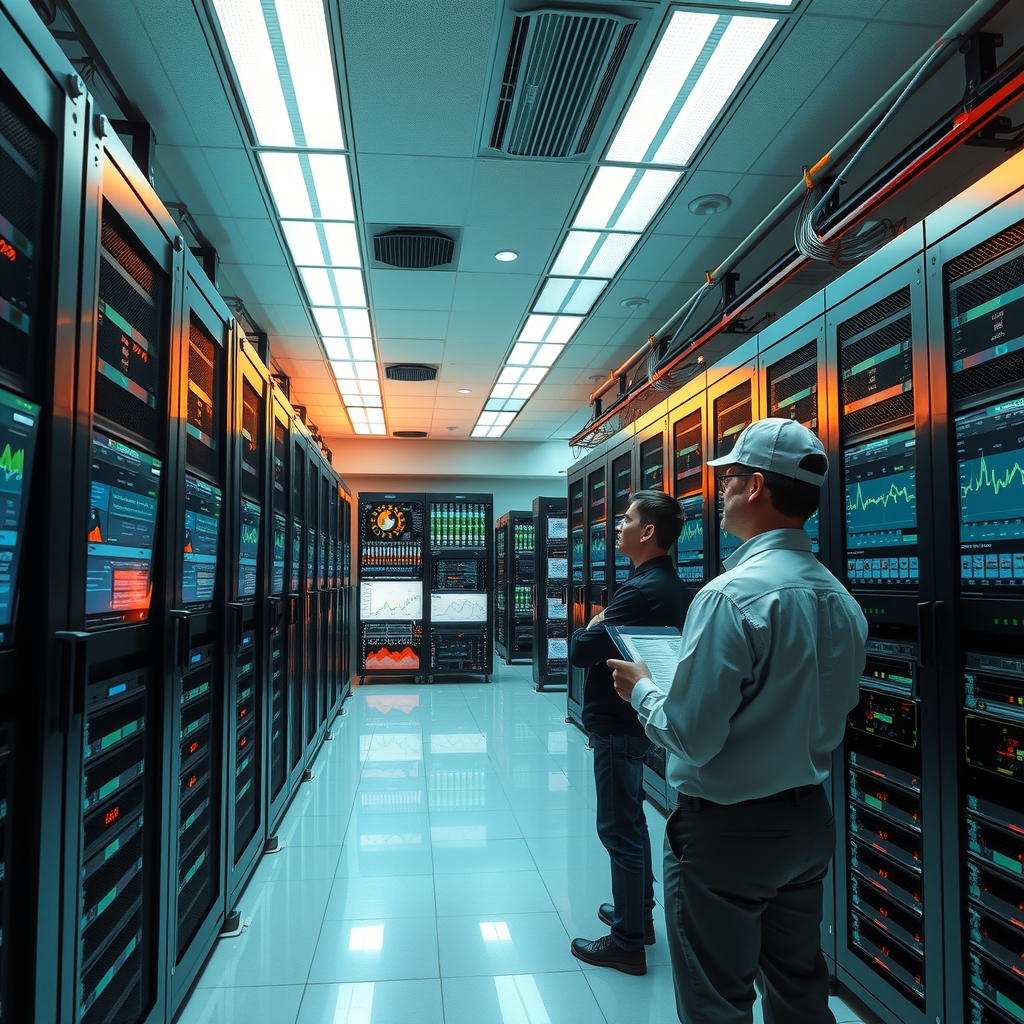
Power availability is not the only electrical constraint facing U.S. data centers preparing to run high-density artificial intelligence workloads. A Fluke survey of 500 data center operators and professionals found that power-quality issues have affected some facilities’ ability to deploy or operate AI and GPU systems, highlighting the importance of internal distribution and monitoring alongside access to electricity from utilities.
Only 36% of respondents said their electrical infrastructure was fully prepared for higher-density AI workloads. Meanwhile, 74% said insufficient power and grid capacity were moderately or severely limiting expansion. The findings point to two related but distinct challenges: securing enough electricity and ensuring a facility can reliably deliver it to equipment at the required scale.
Internal electrical systems can limit usable capacity
About three-quarters of respondents, 76%, reported experiencing electrical or power-system issues. Separately, 79% said power-quality problems had contributed during the previous year to delays, service disruptions, unplanned downtime or serious near-misses. That figure combines several kinds of events; it does not mean that nearly four in five respondents experienced an outage.
Michael Stuart, Fluke’s senior manager and technical fellow, said the central concern is whether a data center’s internal infrastructure can distribute and support power reliably at scale. Problems can arise where electrical, cooling and cabling systems meet, according to Stuart. Issues identified in the survey discussion included harmonics, voltage sags and swells, thermal hotspots, deteriorating cooling systems, and connections that have not been adequately documented or verified.
These conditions can constrain the computing load a facility can support even when it has obtained sufficient power from the grid. Stuart said operators may not be able to use all of their secured capacity if electrical, mechanical or network systems are not performing to specification. The practical implication is that grid access alone does not establish whether a site is ready for a planned GPU rollout.
Measure near the intended GPU loads
For operators preparing to install high-density GPU racks, Stuart recommended measuring power quality as close as possible to the GPU loads along the electrical distribution chain. The suitable measurement points vary by facility and may change during commissioning, as operators gain a clearer picture of actual load conditions.
Power distribution and cooling should also be evaluated together against the intended workload. If measurements show that either system cannot reliably support the planned deployment, Stuart advised addressing the problem before installation proceeds. The survey material does not prescribe a single testing plan for every data center: Stuart said facilities are complex and diverse, so weaknesses should be assessed on a case-by-case basis.
Monitoring coverage is another gap. Some 78% of respondents said they lacked comprehensive, continuous, real-time visibility across critical electrical systems. A further 15% said electrical problems were identified only after performance degradation, equipment failure or downtime had occurred. Those results describe different visibility and detection challenges; they do not establish that all affected facilities experienced the same problems.
Stuart recommended reviewing existing monitoring to determine where additional visibility would most improve reliability. Potential areas include power distribution, backup power, batteries and switchgear, with priorities dependent on the facility’s infrastructure and current monitoring. In operational terms, the survey underscores the value of detecting developing electrical problems before they affect computing performance or interrupt service.
Technician shortages complicate maintenance
Workforce capacity adds pressure to installation, testing and upkeep. Fifty-seven percent of respondents said recruiting qualified electrical technicians had become harder. At the same time, 65% said skills shortages had not delayed infrastructure upgrades or new capacity, so the survey does not indicate that hiring difficulty has uniformly slowed expansion.
Stuart said labor constraints can nevertheless contribute to localized delays, inconsistent installation practices and additional work to correct issues or verify quality. Some problems may not become apparent during an initial inspection and can emerge only after electrical systems are operational. He said qualified electricians should perform and validate the work, using testing and diagnostic tools to identify faults that appear after installation and support long-term reliability.
For data center operators, the findings frame readiness as an ongoing operational task rather than a question of power procurement alone. Verifying electrical and cooling performance, measuring conditions near intended GPU loads and improving visibility into critical systems can help identify whether internal infrastructure is ready to support planned AI workloads.