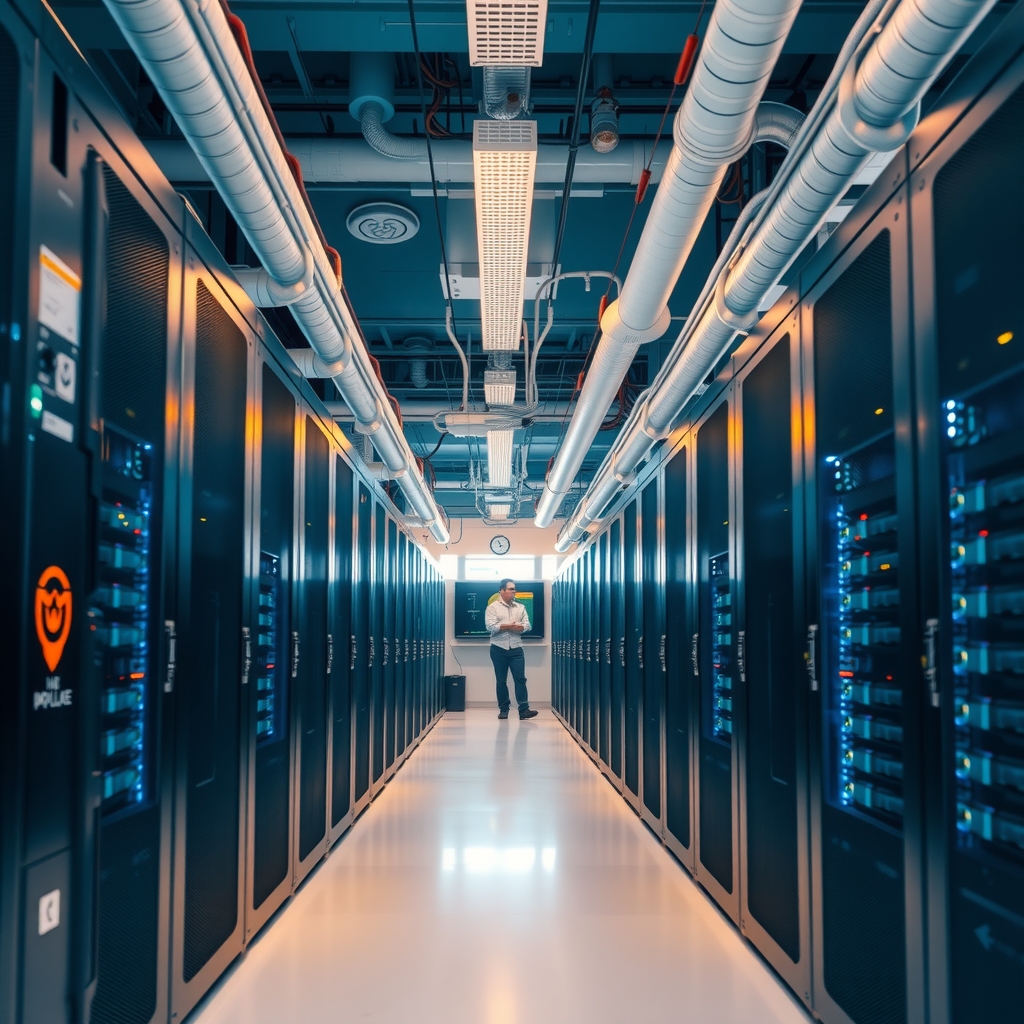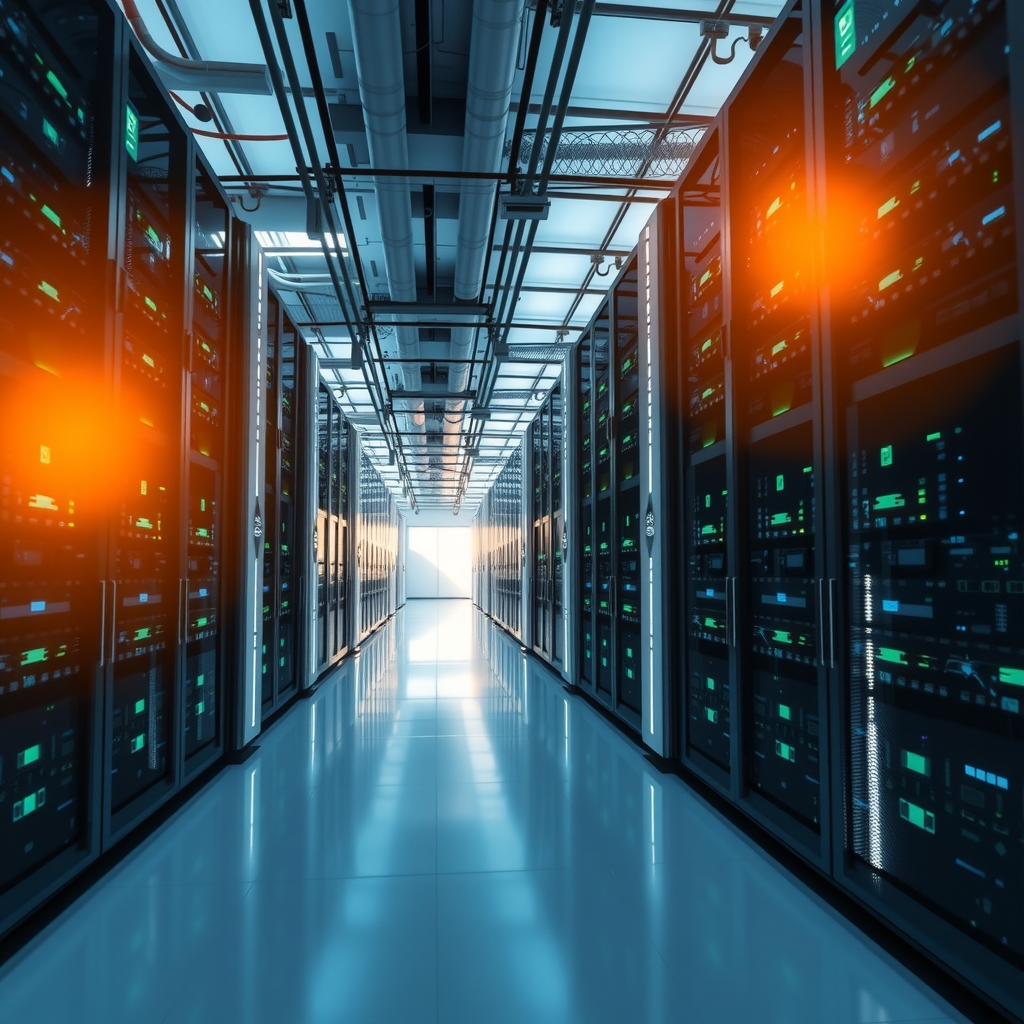
Artificial intelligence infrastructure startup Marlowe AI is raising capital to build data centers tailored to inference workloads, with its first facility planned for next month and a second targeted for the second quarter of 2027. The company’s approach pairs specific hardware, networking and software configurations with categories of inference tasks rather than relying on a single general-purpose accelerator design.
The financing amount is inconsistent in the available account: its headline gives $277 million, while the article text describes a $227 million seed round. The text says Accel led the round, with participation from Bessemer, Altimeter, Emergence Capital and other institutional investors, as well as angel investors including the chief executives of Palo Alto Networks, Uber, Box and Dropbox. GeekWire reported that Marlowe was valued at $1.15 billion.
Founded last year, Marlowe is led by CEO Dan Lewis and Chief Technology Officer Kutta Srinivasan. Lewis previously headed the Microsoft unit responsible for Copilot Studio, the company’s AI agent development tool. Srinivasan was technical lead of Microsoft’s AI infrastructure group.
Facilities built around specific inference workloads
Marlowe says it will tune each data center for a particular inference workload category by adjusting its mix of chips, network configuration and software. The company argues that purpose-built clusters can use hardware more efficiently than general-purpose graphics processing unit clusters. In a launch blog post, Lewis and Srinivasan said that improvements in network architecture, power oversubscription, fleet operations and workload-specific optimization could combine into a 2-to-3-times advantage in performance, availability, resiliency and cost. That figure is the founders’ stated estimate, not an independently established result.
The first planned facility is based on hardware from Etched, an inference-chip startup. Etched supplies its chips in custom inference racks and says its accelerator can deliver multiple times the floating-point operations per second density of graphics cards. The company also describes an interconnect designed to carry out some data movement tasks more than four times faster than competing silicon, alongside custom power management and cooling components.
The source account attributes one potential performance advantage to the chip’s ability to run at higher clock speeds with less concern about overheating. Graphics cards may operate below their maximum clock speed to manage heat, while Etched says its chip is less prone to overheating. The account provides no independent benchmark results for Marlowe’s planned installation.
AMD racks planned for a second site
Marlowe’s second facility is scheduled to come online in the second quarter of 2027 and will use racks based on AMD’s Helios design. A Helios rack combines 72 AMD graphics cards with central processing units and Pensando data processing units, or DPUs. The DPUs take on networking work that would otherwise use resources on the other processors, leaving more capacity for AI workloads.
The Helios design also arranges networking and power-delivery links to reduce the need for manual cable maintenance. Its coolant lines use quick-disconnect fittings that can be connected or separated without the specialized tools usually required for that work. Those rack-level details matter to Marlowe’s stated strategy: the company is designing facilities around integrated systems rather than treating accelerators as standalone components.
GeekWire reported that Marlowe has signed a letter of intent for a third data center. Each planned facility is expected to provide tens of megawatts of computing capacity, according to that report. Marlowe plans to use the seed financing for hardware purchases and engineering hires. The company has not supplied further details in the available account about customer workloads, facility locations or the scale of its staffing plans.
Marlowe’s plans place two different accelerator platforms in its initial buildout: Etched hardware for the first site and AMD Helios-based systems for the second. Its proposed model depends on matching compute, networking, power and cooling choices to inference workloads, while the facilities’ timelines and performance claims remain to be demonstrated in operation.